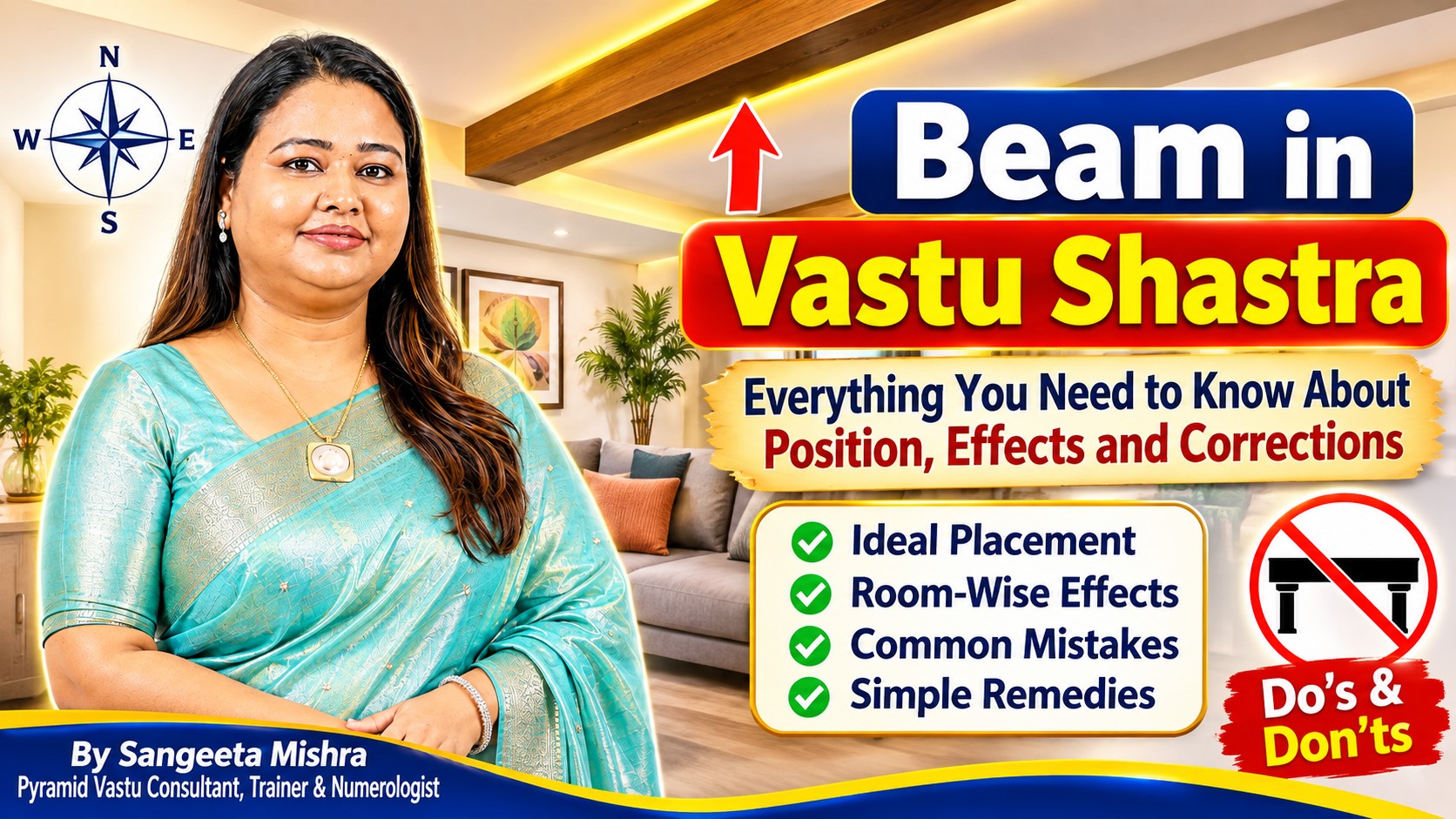
Beam in Vastu Shastra: Everything You Need to Know About Position, Effects and Corrections
By Sangeeta Mishra | Pyramid Vastu Consultant, Trainer & Numerologist
Introduction
Beam in Vastu Shastra: Everything You Need to Know About Position, Effects and Corrections is an important topic to understand when designing, purchasing or renovating a home. Beams are essential structural elements that support a building, but according to traditional Vastu principles, their placement is also considered significant. A beam running directly above a bed, sofa, dining table, puja room or safe is traditionally viewed as something to avoid wherever practical.
Although beams cannot always be removed or relocated, understanding their position and exploring suitable corrections can help create a comfortable and well-planned living environment. In this blog, we will explore the importance of beams in Vastu, their placement in different rooms, traditional considerations, common mistakes and possible correction methods.
Understanding Beams and Their Importance in Vastu
A beam is a horizontal structural component that supports the weight of a building and transfers the load to columns or walls. Beams are commonly found in bedrooms, living rooms, kitchens, dining areas and commercial spaces.
From a traditional Vastu perspective, the placement of a beam is considered important because it can create a visually heavy or restrictive feeling in the area below it.
Special attention is generally given to beams positioned directly above places where people spend considerable time, such as sleeping, sitting, eating, praying or working.
It is important to remember that beams are necessary for structural stability. Their presence alone does not automatically indicate a Vastu defect.
How Beam Placement Can Affect Different Areas of Your Home
Every room serves a different purpose. Therefore, traditional Vastu considerations regarding beams may vary depending on how the space is used.
1. Beam Above the Bed in the Bedroom
The bedroom is a space for rest, relaxation and personal comfort. According to traditional Vastu guidelines, a prominent beam directly above the bed is generally considered undesirable.
What should you consider?
- Avoid placing the bed directly beneath a prominent beam wherever possible.
- Pay particular attention to the area above the head and sleeping position.
- If the room layout permits, rearrange the bed to avoid the beam.
- Maintain a visually comfortable and uncluttered bedroom.
A practical furniture arrangement should always be prioritised without compromising safe access and comfort.
2. Beam Above the Sofa in the Living Room
The living room is where family members gather and guests spend time. A beam directly above the main sofa or frequently used seating area is traditionally avoided.
What should you consider?
- Position the sofa away from the beam wherever practical.
- Avoid making the ceiling appear unnecessarily heavy.
- Use suitable lighting to maintain a comfortable atmosphere.
- Keep the seating arrangement open and balanced.
3. Beam Above the Dining Table
The dining area is associated with family interaction and shared meals. Traditional Vastu guidance generally recommends avoiding a prominent beam directly above the dining table.
What should you consider?
- Shift the dining table away from the beam if the layout allows.
- Ensure comfortable seating and sufficient movement space.
- Avoid overcrowding the dining area with heavy furniture.
4. Beam Above the Study Table or Office Desk
A study room or home office should provide a comfortable environment for concentration and productivity. A prominent beam directly above a study table or workstation is traditionally considered less desirable.
What should you consider?
- Place the desk in a suitable alternative position.
- Ensure proper lighting and comfortable seating.
- Avoid sitting directly beneath an exposed beam for extended periods, if possible.
5. Beams in the Kitchen
Beams may also be present in kitchen ceilings. Since the kitchen involves regular movement and daily activities, practical layout and comfort are important.
What should you consider?
- Keep the cooking and preparation areas convenient to use.
- Avoid unnecessary visual heaviness in the ceiling design.
- Maintain adequate ventilation and lighting.
- Consider the overall kitchen layout before planning any interior changes.
6. Beam Above the Puja Room or Prayer Area
The puja room is considered a sacred space in a home, dedicated to prayer, meditation and spiritual activities. According to traditional Vastu principles, a beam directly above the puja room or prayer area is generally considered undesirable.
What should you consider?
- Avoid placing a beam directly above the mandir or prayer area wherever possible.
- Avoid sitting or standing directly beneath a beam while performing prayers.
- If the layout permits, shift the mandir to a suitable alternative location.
- Keep the prayer area clean, peaceful and well-lit.
7. Beam Above the Safe or Locker
A safe or locker is generally used to store cash, jewellery, important documents and valuables. In traditional Vastu guidance, placing a beam directly above a safe or locker is considered undesirable.
What should you consider?
- Avoid positioning the safe or locker directly beneath a prominent beam.
- If possible, relocate it to a suitable alternative position.
- Ensure that the locker is placed in an appropriate direction according to the overall Vastu layout.
- Keep the storage area organised and free from unnecessary clutter.
Common Beam-Related Vastu Mistakes
During home planning and interior design, beams are sometimes overlooked. The following are common points homeowners should pay attention to:
- Placing the bed directly beneath a prominent beam.
- Positioning the main sofa below an exposed beam.
- Keeping the dining table directly under a heavy beam.
- Placing the mandir directly beneath a beam.
- Keeping a safe or locker directly below a prominent beam.
- Ignoring beam placement while planning furniture arrangements.
- Creating unnecessarily heavy false-ceiling designs.
- Making structural changes without professional guidance.
- Applying random Vastu remedies without understanding the property’s layout.
Considering beam placement during the planning stage can help avoid unnecessary interior adjustments later.
Do’s and Don’ts for Beam Vastu
| Do’s | Don’ts |
|---|---|
| Plan furniture placement carefully. | Avoid placing beds directly beneath prominent beams wherever practical. |
| Keep the puja area away from a beam wherever possible. | Avoid praying directly beneath a beam. |
| Position the safe or locker away from a beam where practical. | Avoid placing a locker directly beneath a prominent beam. |
| Maintain good lighting. | Do not ignore exposed beams during interior planning. |
| Keep the ceiling visually balanced. | Avoid unnecessarily heavy ceiling treatments. |
| Seek personalised Vastu guidance. | Do not apply random remedies without assessment. |
| Consult a structural engineer before modifications. | Never cut or remove a structural beam without professional approval. |
Practical Ways to Address Beam-Related Vastu Concerns
What if a beam is already present and changing the room layout is difficult? In such situations, homeowners can explore suitable non-structural options.
1. Rearrange the Furniture
Furniture rearrangement is often the simplest approach. If possible, move the bed, sofa, dining table, workstation, mandir or locker away from the beam.
2. Consider a False Ceiling
A professionally designed false ceiling may help conceal an exposed beam and create a more uniform appearance. However, it should be planned carefully to maintain adequate ceiling height, ventilation and access to essential services.
3. Improve Lighting
Appropriate lighting can make the room appear more open and comfortable. Well-planned ceiling and wall lighting can also improve the visual balance of the space.
4. Explore Pyramid Vastu Corrections
Pyramid Vastu methods may be considered as part of a personalised correction approach. The type and placement of any correction should depend on the property’s layout, the position of the beam and the overall Vastu assessment.
There is no single remedy suitable for every beam-related concern. A proper assessment is recommended before selecting a correction.
Important Things to Check Before Choosing a Correction
Before making any changes, take time to understand the actual situation.
- Identify the exact location of the beam.
- Check whether it is exposed or covered by a false ceiling.
- Observe whether it runs above a bed, sofa, dining table, workstation, puja room or safe.
- Consider the room’s size and furniture arrangement.
- Evaluate practical comfort, lighting and ventilation.
- Consult a qualified structural engineer before any structural modification.
- Seek personalised Vastu guidance rather than applying a general remedy to every situation.
These considerations can help you make informed decisions while planning your home.
Frequently Asked Questions About Beam in Vastu Shastra
Q1. Is a beam above the bed considered good as per Vastu?
According to traditional Vastu principles, a prominent beam directly above the bed is generally avoided. Rearranging the bed may be considered wherever practical.
Q2. Can a beam be present in the living room?
Yes. Beams are normal structural elements in buildings. Traditional Vastu guidance mainly focuses on their position above frequently used seating areas.
Q3. Is a beam above the puja room considered good?
Traditional Vastu guidance generally recommends avoiding a beam directly above the mandir or prayer area. If possible, consider an alternative location for the prayer space.
Q4. Can we pray beneath a beam?
As per traditional Vastu recommendations, it is preferable to avoid sitting or standing directly beneath a prominent beam while performing prayers, wherever practical.
Q5. Should a safe or locker be placed below a beam?
Traditional Vastu principles generally recommend avoiding a safe or locker directly beneath a prominent beam. Consider a suitable alternative position based on the overall layout.
Q6. What should I do if I cannot remove a beam?
Never attempt to remove a structural beam yourself. You can consider furniture rearrangement, suitable ceiling design or personalised Vastu guidance. Using a specific pyramid tool can solve your problem with consultation.
Q7. Can a false ceiling help with a beam-related Vastu concern?
A false ceiling can conceal an exposed beam and create a more uniform ceiling appearance. It is a design option, not a guaranteed Vastu correction, and should be planned by a qualified professional.
Q8. Can Pyramid Vastu help with beam-related concerns?
Pyramid Vastu methods may be explored as part of a personalised correction plan. The appropriate approach depends on the property’s layout and the beam’s position.
Q9. Should every beam be considered a Vastu defect?
No. Beams are essential structural components. Their presence alone does not mean that a property has a Vastu defect. Their placement and the overall layout are considered during a Vastu assessment.
Conclusion: Make Your Space More Balanced with the Right Vastu Approach
Beams are an essential part of building construction, but their placement deserves attention when planning a home’s interiors. Traditional Vastu Shastra recommends avoiding prominent beams directly above important areas such as beds, sofas, dining tables, workstations, puja rooms and safes wherever possible.
If changing the furniture arrangement is not practical, suitable non-structural design options and personalised Vastu guidance can be explored.
The key is to understand the property’s layout, select appropriate solutions and maintain a balance between traditional Vastu principles, modern interior design and structural safety.
Get Expert Vastu Guidance
For personalised Vastu consultation and guidance, connect with Sangeeta Mishra, Pyramid Vastu Consultant, Trainer and Numerologist, at DRGSA – Pyramid Vastu Center, Dadar, Mumbai.
Contact: 9820819903 / 9820819904
Websites:
Learn | Apply | Transform

Sri Pyramid Yantra Center was founded in Mumbai in 2006 by Mr Sanjiv Joshi and Mr Giridhar S. Shetty, driven by a shared passion for Vastu Shastra and pyramid energy. Starting as an informal home-based setup, the centre focused on helping families align their living spaces with Vastu principles using the power of pyramids. In 2008, they opened their first formal office in Goregaon, Mumbai, which quickly evolved into a full-fledged learning centre for Vastu education. To make the knowledge accessible to all, they introduced a free Vastu course with pyramid remedies, attracting students from all walks of life — housewives, architects, engineers, and college students. The course content was further enriched by incorporating pyramid tools developed by renowned expert Dr Jiten Bhatt. In 2014, growing demand led to a relocation to Dadar, Mumbai, where the centre expanded significantly in both clientele and team strength. When the COVID-19 pandemic struck, the centre seamlessly transitioned to online Vastu courses, reaching students across India and beyond. Today, Sri Pyramid Yantra Center operates from a spacious Dadar office led by Ms Sangeeta S. Mishra and a team of nine dedicated professionals. The centre offers Vastu Shastra courses in English, Hindi, and Marathi, along with personal consultancy and Jiten Pyramid Products. In nearly two decades, it has trained thousands of students and helped countless families and businesses transform their spaces — without demolition.