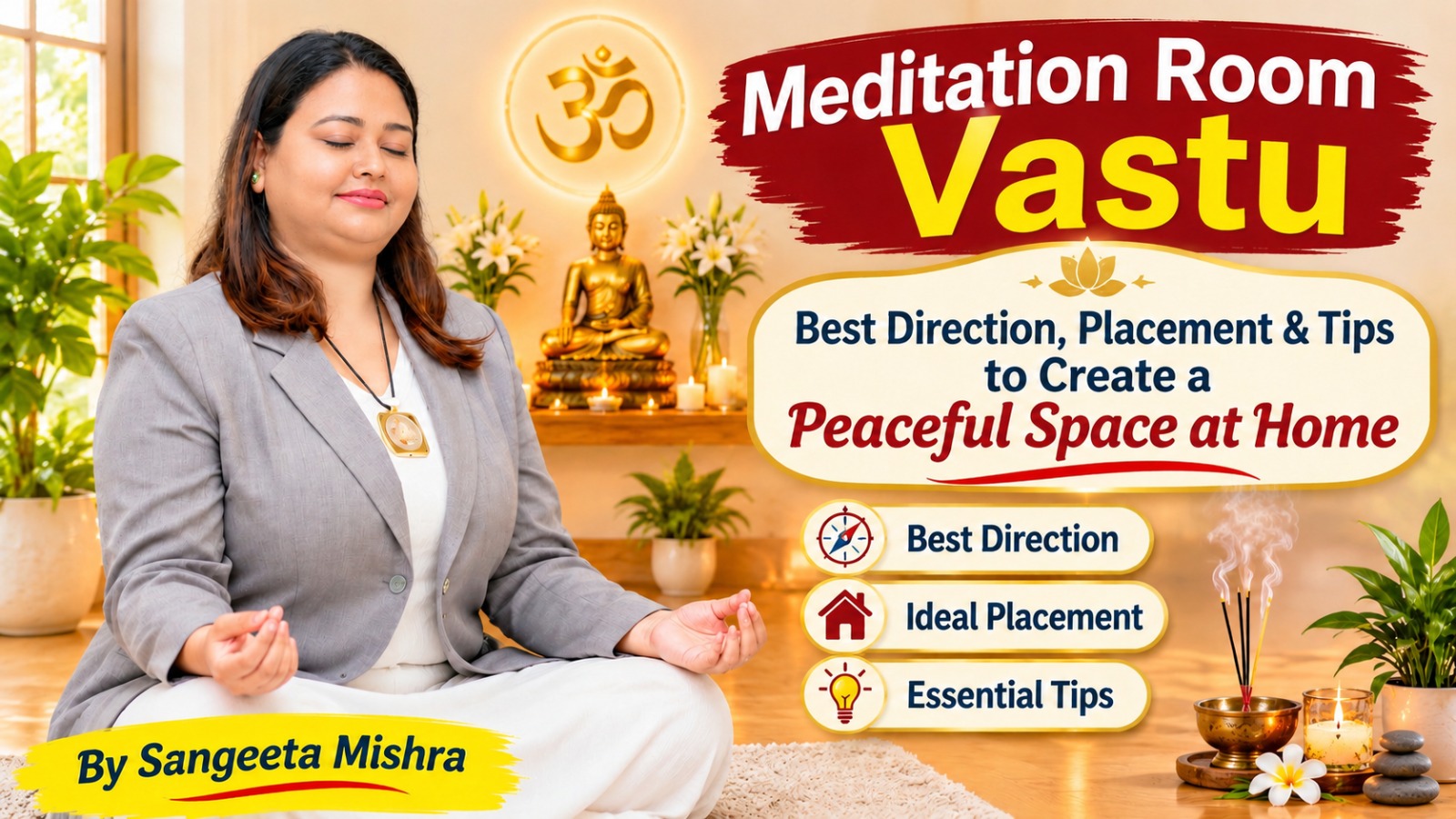
Meditation Room Vastu: Best Direction, Placement & Tips to Create a Peaceful Space at Home
Written by: Sangeeta Mishra
In today’s fast-paced world, creating a peaceful environment at home has become essential for maintaining a balanced lifestyle. Meditation Room Vastu plays an important role in helping you create a dedicated space that encourages calmness, concentration and spiritual well-being. According to traditional Vastu Shastra principles, the direction, placement, colors and arrangement of your meditation space can contribute to a peaceful and harmonious atmosphere. Whether you have a separate meditation room or just a small corner in your home, the right planning can transform it into your personal sanctuary for relaxation and inner peace.
1. Best Direction for a Meditation Room According to Vastu
Direction is an important consideration when selecting a meditation space. According to traditional Vastu principles, certain directions are considered particularly suitable for prayer, meditation and spiritual activities.
- North-East Direction (Ishan Corner): The North-East is traditionally considered an auspicious section for meditation and spiritual practices. It is associated with clarity, tranquility and spiritual growth.
- East Direction: Facing East while meditating is traditionally recommended because this direction is associated with sunrise, positivity and new beginnings.
- North Direction: The North is another direction that can be considered for meditation, traditionally associated with growth and prosperity.
Whenever possible, choose the North-East section for your meditation room. If this is not practical, the East or North can also be considered.
2. Ideal Placement of a Meditation Space at Home
Your meditation area should be located in a peaceful part of the house, away from frequent movement and unnecessary disturbances.
Avoid placing it near television areas, noisy appliances, kitchens or busy passages. If you do not have a separate room, you can create a dedicated meditation corner in your bedroom or living room.
A small partition, wooden screen or simple arrangement of furniture can help distinguish the meditation area from the rest of the space.
The most important consideration is to maintain cleanliness, comfort and a peaceful atmosphere.
3. Best Colors for a Meditation Room
Colors influence the overall appearance and atmosphere of a space. For a meditation room, choose soft and soothing shades.
- White: Represents purity, simplicity and peace.
- Light Yellow: Creates a warm and uplifting atmosphere.
- Light Green: Symbolizes freshness, balance and harmony.
- Cream and Beige: Provide a natural and soothing appearance.
- Light Blue: Creates a visually calming environment.
These colors has to be aligned as per the direction .
Avoid excessive use of dark or overly vibrant colors that may make the space feel visually overwhelming.
4. Essential Elements for a Positive Meditation Space
A well-designed meditation room should be simple, comfortable and free from distractions. Consider including:
- Comfortable Seating: Use a meditation cushion, yoga mat or comfortable floor seating.
- Natural Lighting: Allow natural sunlight to enter whenever possible.
- Indoor Plants: Introduce suitable plants to bring freshness and a connection with nature.
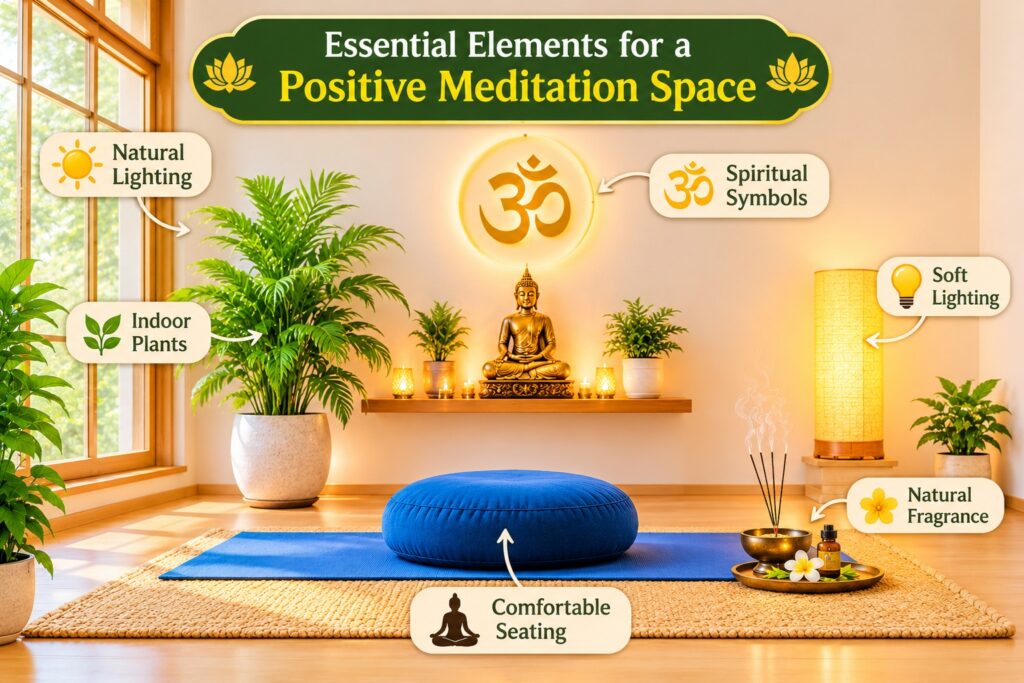
- Soft Lighting: Choose gentle lighting instead of harsh artificial lights.
- Spiritual Symbols: Include meaningful spiritual artwork, religious images or symbols.
- Natural Fragrance: Incense or essential oils can be used according to personal preference.
Keep the decor minimal so that your surroundings support concentration rather than distract you.
5. Important Vastu Tips for a Meditation Room
Follow these traditional Vastu-inspired recommendations while designing your meditation space:
- Prefer the North-East direction for your meditation area.
- Face East or North while meditating, wherever practical.
- Keep the space clean, organized and clutter-free.
- Avoid storing unwanted or broken objects in the meditation area.
- Ensure adequate ventilation and natural light.
- Avoid overcrowding the room with heavy furniture.
- Maintain a quiet atmosphere for uninterrupted meditation.
- Minimize electronic distractions.
A peaceful environment, combined with a consistent meditation routine, can make your personal meditation experience more comfortable and meaningful.
6. Common Meditation Room Vastu Mistakes to Avoid
While creating your meditation space, avoid these common mistakes:
- Selecting a location near noisy or frequently occupied areas.
- Allowing unnecessary clutter to accumulate.
- Using excessive decorative elements.
- Ignoring natural light and ventilation.
- Choosing uncomfortable seating arrangements.
- Using harsh lighting that affects the atmosphere.
- Mixing the meditation area with storage or utility spaces.
Remember, a meditation room does not need to be expensive or elaborate. Even a small, thoughtfully organized space can become a peaceful retreat.
7. Improve Your Meditation Space with Expert Vastu Consultation – Without Demolition
Not every home has the ideal layout or a separate meditation room. Sometimes, the existing placement of rooms, furniture or other elements may not align with traditional Vastu recommendations. However, improving the Vastu of your home does not necessarily require expensive renovations or structural demolition.
At Jiten Pyramid Center, Dadar, you can book an appointment with Sangeeta Mishra for personalized Vastu consultation and guidance. Through a detailed understanding of your existing space, you can explore suitable Vastu corrections and practical recommendations without demolition.
Whether you want to establish a meditation corner, improve your existing prayer room or understand the Vastu of your entire home, personalized consultation can help you make informed decisions about your space.
With the right guidance, you can make meaningful changes to your surroundings without undertaking unnecessary structural modifications.
Conclusion: Create Your Personal Space for Peace and Positivity
A meditation room is more than just a corner of your house; it is a personal space for self-reflection, relaxation and spiritual connection. By following traditional Vastu Shastra principles, selecting an appropriate direction, choosing soothing colors and maintaining an organized environment, you can create a peaceful atmosphere for your meditation practice.
With thoughtful planning and the right Vastu guidance from Sangeeta Mishra, even a small corner of your home can become a beautiful sanctuary for inner peace, positivity and harmony.
For personalized Vastu consultation and appointments, visit Jiten Pyramid Center, Dadar, and discover practical ways to improve your space without demolition.
Written by: Sangeeta Mishra

Sri Pyramid Yantra Center was founded in Mumbai in 2006 by Mr Sanjiv Joshi and Mr Giridhar S. Shetty, driven by a shared passion for Vastu Shastra and pyramid energy. Starting as an informal home-based setup, the centre focused on helping families align their living spaces with Vastu principles using the power of pyramids. In 2008, they opened their first formal office in Goregaon, Mumbai, which quickly evolved into a full-fledged learning centre for Vastu education. To make the knowledge accessible to all, they introduced a free Vastu course with pyramid remedies, attracting students from all walks of life — housewives, architects, engineers, and college students. The course content was further enriched by incorporating pyramid tools developed by renowned expert Dr Jiten Bhatt. In 2014, growing demand led to a relocation to Dadar, Mumbai, where the centre expanded significantly in both clientele and team strength. When the COVID-19 pandemic struck, the centre seamlessly transitioned to online Vastu courses, reaching students across India and beyond. Today, Sri Pyramid Yantra Center operates from a spacious Dadar office led by Ms Sangeeta S. Mishra and a team of nine dedicated professionals. The centre offers Vastu Shastra courses in English, Hindi, and Marathi, along with personal consultancy and Jiten Pyramid Products. In nearly two decades, it has trained thousands of students and helped countless families and businesses transform their spaces — without demolition.