
Positions of Windows as per Vastu Shastra: Ideal Directions and Important Tips
Positions of Windows as per Vastu Shastra: Ideal Directions and Important Tips
Windows play an important role in every home. They allow fresh air and natural sunlight to enter, improve ventilation and create a bright, comfortable living environment. According to Vastu Shastra, the position and direction of windows can also influence the balance of energy within a space. Choosing suitable window placements is therefore considered an important part of Vastu planning.
In this blog, we will explore the ideal positions of windows as per Vastu Shastra, recommended directions, placement guidelines and common mistakes to avoid.
Importance of Windows as per Vastu Shastra
According to traditional Vastu principles, windows are considered openings that allow natural light, fresh air and positive energy to enter the home. Properly positioned windows can make rooms feel more open, bright and welcoming.
Vastu recommendations generally emphasise adequate natural light and ventilation while maintaining a balanced arrangement of openings in different directions.
Along with following Vastu guidelines, homeowners should also consider the building’s structure, climate, privacy and practical ventilation requirements.
Ideal Directions for Windows as per Vastu Shastra
The direction of windows is an important consideration when planning a home. The following directions are commonly recommended in traditional Vastu practices.
1. North Direction
The North direction is traditionally associated with prosperity and positive opportunities. Windows in this direction are often considered favourable because they can allow natural light into the home without excessive direct sunlight in many locations.
Keep North-facing windows clean and unobstructed wherever possible to encourage good airflow and natural brightness.
2. East Direction
The East direction is associated with the rising Sun and is traditionally considered an auspicious direction for windows.
East-facing windows can allow morning sunlight to enter the home, creating a bright and pleasant atmosphere. Many Vastu practitioners recommend having suitable windows in the East to welcome natural light and freshness.
Important Vastu Guidelines for Window Placement
Apart from choosing the direction, a few additional points are traditionally considered important when planning windows.
- Prefer balanced placement: Windows should be arranged thoughtfully so that natural light and ventilation are distributed throughout the home.
- Keep windows clean: Dusty, damaged or blocked windows can reduce natural light and airflow. Clean and maintain them regularly.
- Avoid unnecessary obstructions: Keep the areas around windows reasonably clear so that sunlight and fresh air can enter.
- Choose suitable window sizes: The size of windows should complement the room, building structure and ventilation requirements.
- Maintain proper ventilation: Every room should have suitable ventilation according to its use and applicable building requirements.
- Use quality materials: Select durable window frames and fittings that provide safety, weather protection and ease of maintenance.
Vastu Tips for Windows in Different Rooms
Window placement can also be planned according to the function of each room.
Living Room
The living room should feel bright, open and welcoming. Windows in suitable North or East positions are traditionally preferred where the layout allows. Ensure that the room receives adequate daylight and ventilation.
Bedroom
Bedrooms need a comfortable balance of privacy, ventilation and natural light. Windows should be positioned to allow fresh air while avoiding excessive glare and disturbance during rest.
Kitchen
Proper ventilation is particularly important in the kitchen. Windows can help release heat, smoke and cooking odours. Their placement should be planned according to the kitchen layout and safety requirements.
Bathroom
Bathrooms require adequate ventilation to reduce moisture and prevent unpleasant odours. Windows, ventilators or suitable mechanical exhaust systems can help maintain a hygienic environment.
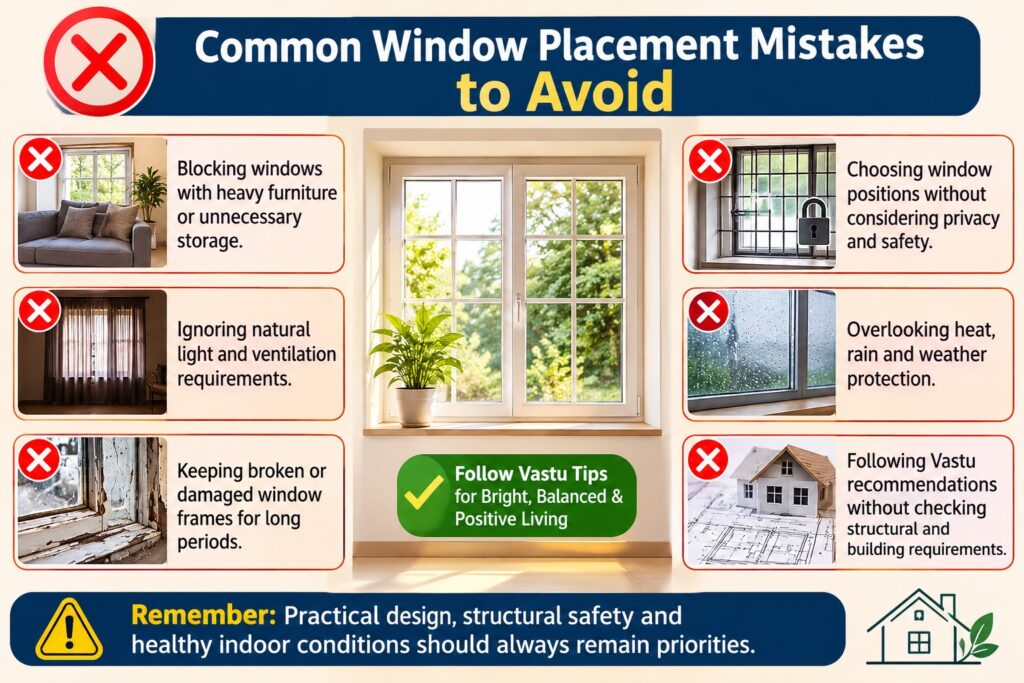
Common Window Placement Mistakes to Avoid
While planning windows, homeowners should avoid these common mistakes:
- Blocking windows with heavy furniture or unnecessary storage.
- Ignoring natural light and ventilation requirements.
- Keeping broken or damaged window frames for long periods.
- Choosing window positions without considering privacy and safety.
- Overlooking heat, rain and weather protection.
- Following Vastu recommendations without checking structural and building requirements.
Remember that practical design, structural safety and healthy indoor conditions should always remain priorities.
Consult a Vastu Expert for Window Placement Guidance
Every property has a different layout, entrance direction, room arrangement and surrounding environment. Therefore, window placement should be evaluated in relation to the complete floor plan rather than considering one direction in isolation.
In modern-day construction, windows are available in various sizes, shapes and proportions. Therefore, Vastu remedies and recommendations should be customised according to the existing window design and the specific requirements of the property. It is not just the direction of the windows that matters; their exact placement, size, proportion and alignment with respect to the directional zones also play an important role in the overall planning and development of a space.
These considerations may vary between residential and commercial properties, as both have different layouts, functional requirements and usage patterns. A detailed assessment of all these factors is essential before suggesting suitable Vastu corrections or remedies.
Sangeeta Mishra at Jiten Pyramid Dadar Center offers Vastu consultation and guidance to help individuals understand the traditional Vastu considerations for their residential and commercial spaces.
For personalised guidance regarding window positions and other aspects of your property’s layout, you can connect with Jiten Pyramid Dadar Center.
Conclusion
Understanding the positions of windows as per Vastu Shastra can help homeowners plan brighter, more comfortable and well-ventilated spaces. North and East directions are commonly preferred in traditional Vastu recommendations, while West and South window placements should be considered according to the property’s layout and practical requirements.
By combining traditional Vastu principles with good architectural planning, natural lighting, ventilation and safety, you can create a home that feels balanced, pleasant and welcoming.

Sri Pyramid Yantra Center was founded in Mumbai in 2006 by Mr Sanjiv Joshi and Mr Giridhar S. Shetty, driven by a shared passion for Vastu Shastra and pyramid energy. Starting as an informal home-based setup, the centre focused on helping families align their living spaces with Vastu principles using the power of pyramids. In 2008, they opened their first formal office in Goregaon, Mumbai, which quickly evolved into a full-fledged learning centre for Vastu education. To make the knowledge accessible to all, they introduced a free Vastu course with pyramid remedies, attracting students from all walks of life — housewives, architects, engineers, and college students. The course content was further enriched by incorporating pyramid tools developed by renowned expert Dr Jiten Bhatt. In 2014, growing demand led to a relocation to Dadar, Mumbai, where the centre expanded significantly in both clientele and team strength. When the COVID-19 pandemic struck, the centre seamlessly transitioned to online Vastu courses, reaching students across India and beyond. Today, Sri Pyramid Yantra Center operates from a spacious Dadar office led by Ms Sangeeta S. Mishra and a team of nine dedicated professionals. The centre offers Vastu Shastra courses in English, Hindi, and Marathi, along with personal consultancy and Jiten Pyramid Products. In nearly two decades, it has trained thousands of students and helped countless families and businesses transform their spaces — without demolition.